


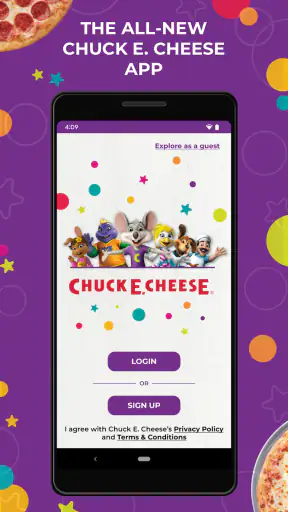
Chuck E. Cheese Fun Pass is the kind of app I would install before a family visit rather than keep opening out of habit. It belongs to the food and drink category, but its real purpose is to make ordering and Chuck E. Cheese visits easier while giving regular customers a reason to return to the app. After using it, my impression is that the first experience is straightforward and appealing, yet its lasting value depends heavily on how often your family already visits Chuck E. Cheese.
The app is free, aimed at Everyone, and developed by Chuck E. Cheese. It has built a respectable audience, with more than a million installs and an average rating of 4.6 from roughly fourteen thousand ratings. Those figures suggest that it works well for many customers, but they do not automatically make it useful for everyone. The important question is whether its ordering convenience and perks fit your actual routine.
What the first week feels like
My first impression was that Chuck E. Cheese Fun Pass is more practical when I treat it as a visit-planning tool than as an app I browse casually. The central appeal is the ability to order online without making a phone call or waiting until I am already at the restaurant. That is especially useful when I am coordinating a family outing and want to reduce one small source of stress.
The setup is not difficult, but the experience makes more sense when I already know that I am going to Chuck E. Cheese. I would not install it simply to explore a menu with no visit in mind. The app’s value appears when I can decide what the family needs, place an order, and use the available account-related benefits as part of the same plan.
One practical advantage is that online ordering lets me handle the food decision before children become impatient. In a realistic weekend scenario, I could choose the restaurant before leaving home, arrange the order while checking the family schedule, and arrive with fewer decisions still waiting. That does not transform a busy outing, but it removes the need to repeat everyone’s requests at a counter.
I also found that the app rewards a little preparation. If I am ordering for more than one person, it helps to settle the main choices before opening the order screen. That sounds obvious, but it prevents the app from becoming another place where the family debates food while standing in a noisy entertainment venue. The strongest first-week benefit is therefore not novelty; it is moving part of the visit into a calmer moment.
The free price makes trying it an easy decision for existing customers. There is no separate purchase required just to see whether the ordering flow suits me. Still, “free” does not mean it is automatically worthwhile. If I visit only once, or if I usually prefer ordering in person, the download may have little lasting purpose after that first use.
The app’s current version is 2.6, and it supports operating systems from version 10 onward. That gives it a reasonably broad audience, although anyone using an older device should check compatibility before planning around it. I appreciate that this is a simple practical detail: an app intended for family outings is most useful when it works on the phone a parent actually carries, not only on a newer device.
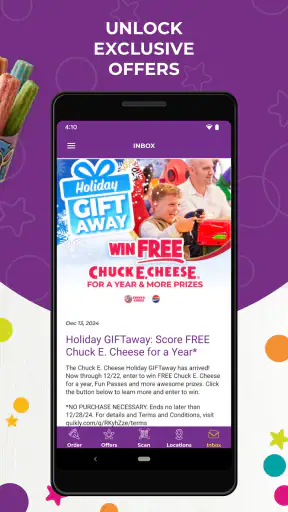
The exclusive free perks are another reason the first week feels more interesting than a standard restaurant-ordering app. They can make the account feel worthwhile even when the ordering process itself is familiar. My advice is to look at the available benefit before building the whole visit around it. A perk is helpful when it matches what I was already planning to buy; it is less helpful if it encourages an unnecessary visit or changes the family budget.
Where it beats the usual alternatives
Compared with calling the restaurant, the app is easier to review before submitting an order. I can take my time, avoid repeating details, and keep the process connected to my phone. Compared with ordering only after arriving, it can reduce waiting and make the visit feel more organized. Those are modest improvements, but they are exactly the kind that matter when I am managing children, timing, and several appetites at once.
It is less compelling than a general food-delivery app when I want to compare many restaurants or have food brought to my home. This is not a broad restaurant marketplace. Its usefulness is tied to Chuck E. Cheese, so the narrow focus is both its strength and its limitation. I would choose it for a planned Chuck E. Cheese visit, not as my default food-ordering application.
There is also a difference between convenience and control. A general delivery service may be better for comparing delivery times or restaurants, while this app is better suited to customers who already know where they are going. That distinction helps avoid disappointment: the app does not need to replace every food app to be useful. It only needs to make this particular kind of outing smoother.
Does the value survive beyond the first visit?
The month-to-month question is more demanding. A first visit can make the app feel worthwhile because the ordering process is new and the perks are noticeable. After that, I ask whether I would still open it before every Chuck E. Cheese trip. My answer is conditional: families who visit regularly are the natural audience, while occasional visitors may find that the benefit fades quickly.
Recurring value comes from repetition. If I routinely plan birthday outings, weekend entertainment, or family meals at Chuck E. Cheese, keeping the app installed can save small amounts of effort each time. The convenience compounds because I already understand the flow, know what the family usually orders, and can check the available benefits without starting from scratch.
For an occasional visitor, the calculation is different. A single online order may be convenient, but it may not justify giving the app permanent space on a phone. I would probably install it for a planned event, use it during that visit, and then decide whether another visit is likely soon. That is not a criticism of the app; it reflects how specialized it is.
The strongest long-term use case is a household that has a predictable pattern. For example, if a parent often arranges the outing while another adult handles transportation, having the order prepared in advance can make coordination easier. The app becomes part of the routine: decide the visit, check the current benefit, place the order, and keep the phone available for the rest of the day.
A less obvious trade-off is that perks can influence behavior. Exclusive free benefits may encourage me to return more often, but I should separate genuine savings from spending that I would not otherwise make. My practical rule would be simple: use a perk when it supports an existing Chuck E. Cheese plan, not when it creates a plan that the household does not need.
Another useful habit is to check the ordering details before leaving home rather than waiting until everyone is hungry. That gives me time to notice whether the selected items fit the group and whether the order needs adjustment. It also keeps the app in its best role: a preparation aid, not another distraction during the visit.
The app is not likely to become a daily food companion, and I do not think it should be judged by that standard. Its recurring value is event-based. A family may open it only around visits, but that can still be enough if each opening prevents confusion or makes the order easier. The right measure is not frequency of use alone; it is whether each use removes friction.
What I would maintain, and what I would ignore
Maintenance is relatively light in concept, but specialized apps can still become annoying if I forget why they are installed. I would keep notifications and account details under control rather than allowing the app to compete with essential messages. Since its purpose is tied to visits and ordering, I would rather check it intentionally than be reminded about it constantly.
I would also review the available perks when planning a visit instead of assuming that yesterday’s benefit remains the reason to return. Benefits are most useful when I understand them before ordering. This habit prevents a common mistake: building expectations around a promotion and only checking the conditions after the family has already made plans.
Keeping the app updated is sensible because ordering tools depend on reliable communication with the restaurant. The current version is 2.6, and I would not postpone an available update if I were about to use the app for a birthday or another time-sensitive outing. A small technical problem matters more when several people are waiting for the result.
At the same time, I would not spend much time customizing the app or checking it without a purpose. Unlike a recipe app, restaurant-discovery service, or delivery marketplace, it does not offer a broad reason to browse every day. The best maintenance strategy is simply to keep it ready for a real visit and remove it if my family no longer uses Chuck E. Cheese.
That approach also helps with storage and attention. A free app can still have a cost if it adds clutter or encourages unnecessary spending. I like that the decision is easy to reverse: install it before a visit, use the ordering and perks that matter, and keep it only if the next visit makes that worthwhile.
Where fatigue starts to appear
The main source of fatigue is repetition without enough variety. If every visit follows the same pattern and I already know what I want, opening an app may feel like an extra step rather than a convenience. The ordering benefit is real, but it cannot make a familiar outing feel new indefinitely.
Another limitation is the narrow ecosystem. I cannot use this app to compare Chuck E. Cheese with another family restaurant, find unrelated meals, or manage a broader dining routine. Families who prefer flexibility may be better served by a general ordering platform, especially when the restaurant choice changes from week to week.
I also would not rely on it as the only plan for an important event without checking the order carefully. For a birthday or large family gathering, I would confirm the selected items, timing, and practical details before leaving. The app can reduce preparation work, but it does not remove the need for a parent to verify that the plan matches the group.
The perks may create fatigue if they are the only reason I keep returning. A free extra or special offer feels useful when it complements the visit, but less so when I have to remember complicated conditions or change my order to benefit from it. I prefer a clear, immediate advantage over a reward that requires too much attention.
There is also a social limitation. Ordering ahead can make the food side of the outing smoother, but it does not solve every family-management problem. I still need to coordinate arrival, supervision, preferences, and the children’s expectations. The app handles one slice of the experience, and its value drops if I expect it to organize the entire visit.
For users who rarely visit Chuck E. Cheese, I would probably skip permanent installation. The app is not a poor choice for them; it is simply too focused to earn regular space. A browser or in-person order may be enough for a one-off outing, while a general food app may be more useful between visits.
Who should keep it installed?
I would recommend it most strongly to parents and caregivers who visit Chuck E. Cheese often enough to recognize a routine. It is also a sensible choice for anyone who dislikes making food decisions at the venue and prefers to prepare before the family arrives. The free access and Everyone content rating make it approachable for households, although the person managing the order will still be the main user.
I would be more cautious with users who want a complete restaurant app. If your priority is discovering new places, arranging home delivery, comparing menus, or keeping all restaurant orders in one account, this specialized tool will feel limited. In that situation, a broader alternative is likely a better long-term fit.
My most useful tip is to connect the app to a real decision point: install it when a visit is being planned, check the perk before ordering, and decide afterward whether another visit is likely. That workflow avoids both extremes—ignoring a helpful tool and keeping an unnecessary app forever.
Chuck E. Cheese Fun Pass has been available since May 7, 2021, and its continued presence alongside a strong rating and a large install base suggests that it has found a clear audience. I would not interpret that as proof that every family needs it. Instead, it confirms that the focused approach works for people whose dining and entertainment plans already include Chuck E. Cheese.
After the novelty fades, I see a useful but conditional app. It earns lasting space when online ordering and recurring free perks remove friction from repeated family visits. It does not earn that space for someone who visits rarely, wants restaurant choice, or dislikes maintaining single-purpose apps.
My final recommendation is to treat it as a practical visit companion, not a permanent food hub. For regular Chuck E. Cheese customers, that distinction is positive: the app does one specific job and can make that job easier. For everyone else, try it when a visit is planned, judge the convenience after using it, and keep it only if the routine genuinely benefits from having it ready.


